Work
Selected work
Client projects and published research in workforce development, engineering education, and qualitative methods
Current engagements
Market research on the skills needed for the next-generation semiconductor workforce
Scraping and analysis of over 15,000 semiconductor job postings to identify the types of roles employers are hiring for and how well they align with the consortium’s curricula
Methods: Web scraping · Large-scale qualitative analysis
Program model and learning theory for a semiconductor apprenticeship program
Literature, stakeholder interviews, and case study analyses to inform the design of a national apprenticeship program from both practical and pedagogical perspectives
Methods: Literature review · Interviews · Case studies
Longitudinal, mixed methods evaluation
External evaluation of a National Science Foundation-funded engineering education center working to support and expand pathways for rural students to earn engineering degrees
Methods: End-to-end program evaluation · Surveys · Qualitative analysis
Past engagements
LLM-assisted mixed methods evaluation of an experiential learning program
Department-specific reports on engineering students’ experiences and career preparation, built from Likert-scale and open-ended survey responses
Methods: Local LLM · Surveys · Qualitative analysis
Publications
Thematic analysis with open-source generative AI and machine learning
Co-developed GATOS, a workflow that uses open-source LLMs and NLP tools to build qualitative codebooks at scale, and tested it against traditional thematic analysis
Methods: Open-source LLMs · NLP · Thematic analysis
Read the paper →Synergistic organizational influences: how universities strategically prepare graduate students for industry, government, and non-profit careers
Interviews with administrators at 11 universities on how institutions align graduate programming with careers outside academia, and which strategies work together
Methods: Interviews · Multi-site qualitative study
Read the paper →What engineering employers want: an analysis of technical and professional skills in engineering job advertisements
An analysis of 26,103 engineering job ads against the O*NET skills taxonomy, showing where employer requirements and engineering curricula diverge
Methods: Job ad analysis · O*NET taxonomy · n = 26,103
Read the paper →Sample work
What a finished deliverable looks like
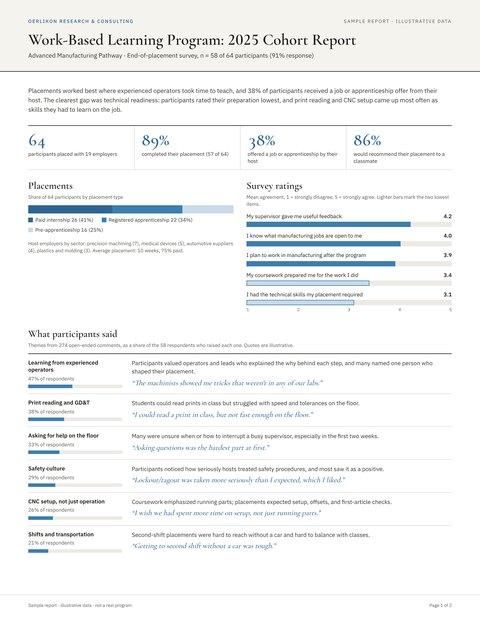
Example
Program evaluation report, produced with an LLM-assisted workflow
A two-page report for a work-based learning program: survey ratings, coded themes from open-ended responses, and recommendations tied to the evidence
Illustrative data, not a real program
See the sample report →Background
- Engineering researchThermal fluids, nanomaterials, and microelectronics fabrication, with years of cleanroom work
- Education researchPeer-reviewed research across the STEM pathway, from K-12 through graduate, postdoctoral, and faculty levels
- Program developmentPrograms built for students and early-career researchers at several stages of that pathway
- TeachingEngineering and education courses, from how to manufacture microelectronics to evidence-based approaches to teaching engineering